Bead Loom Tapestry: How to Weave a Large Beaded Panel
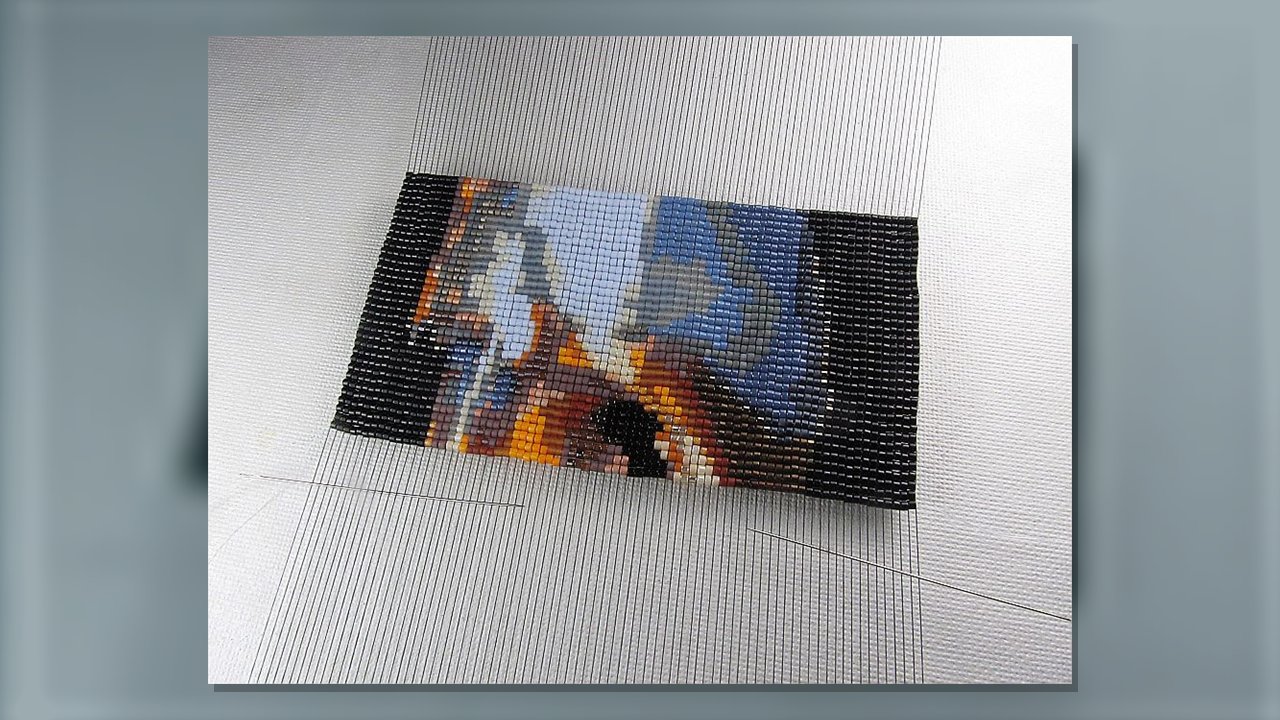
On a loom, a tapestry is simply a large flat picture in beads. The weaving is the same as for a bracelet, row by row, but every choice gets bigger: the loom, the number of warps, the beads and the finishing.
This guide covers what changes when a loom piece grows into a panel.
How wide can a bead loom weave?
The loom sets the limit. Fire Mountain Gems publishes a chart of Mirrix weaving sizes that shows the range. A small square, such as a beaded coaster, fits most looms.
| Loom | Width | Length |
|---|---|---|
| 8 inch | 5 in | 26 in |
| 12 inch | 9 in | 22 in |
| 16 inch | 13 in | 30 in |
| 22 inch | 19 in | 40 in |
| 32 inch | 29 in | 40 in |
| 38 inch | 35 in | 40 in |
A small frame loom is far narrower. For the main loom types, see types of bead looms.
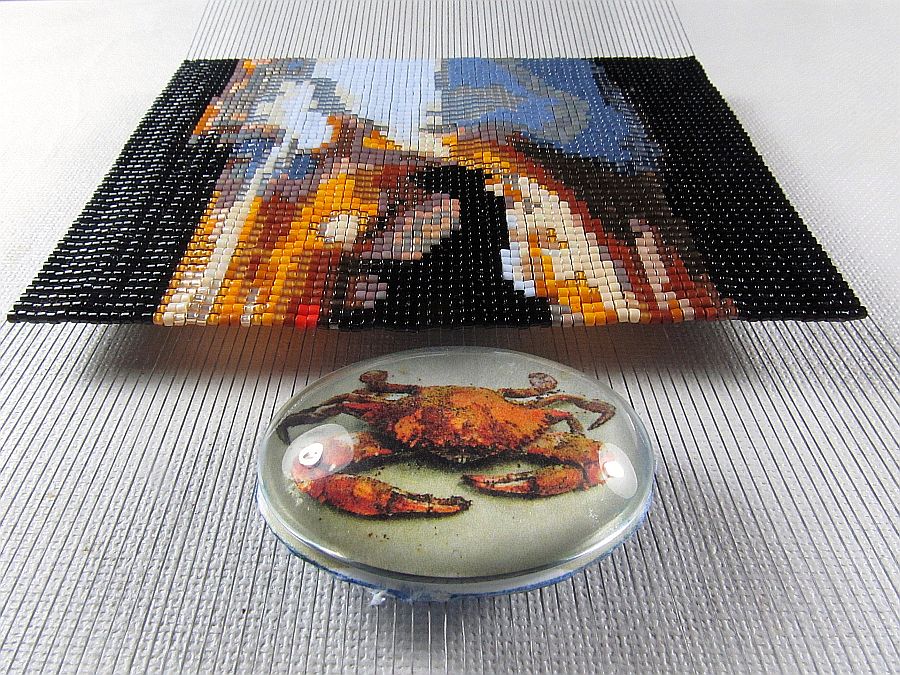
Match the coil to the beads
On an upright loom, the warps sit in a coil or spring. Mirrix, in its bead weaving basics, gives a simple rule: count the beads per inch and subtract one.
- 11/0 Delicas, about 19 to the inch: an 18 dent coil, or 16 for very wide pieces.
- 11/0 round seed beads, about 14 to 15 to the inch: a 14 dent coil.
| Bead | Beads per inch | Coil |
|---|---|---|
| 11/0 Delica | About 19 | 18 dent, or 16 for very wide pieces |
| 11/0 round seed bead | About 14 to 15 | 14 dent |
Use a shedding device for wide work
Passing a needle through a very wide row is slow. Fire Mountain Gems, in how to weave beads on a Mirrix loom, calls the shedding device excellent for weaving wider pieces.
With the device, there are two warps in each dent and two more warp threads than beads. You change the shed each row and lay the beads between the raised and lowered warps. Mirrix adds that the doubled warps make the weaving stronger.
The same guide suggests an extra warping bar for very wide pieces, so the warp does not wrap around the back of the loom. See heddle bead loom weaving for how a shedding device works.

Beads for a smooth surface
Mirrix notes that Delicas and Toho Treasures were designed for bead loom weaving and give a much more fluid surface than round seed beads. Japanese beads are more uniform; Czech beads are more irregular.
On a large panel, that uniformity adds up. For more on shapes, see types of seed beads.
Count the beads before you warp
A panel uses far more beads than a cuff, so estimate early. Erin works out bead quantities from the area of the design.
One square inch of flat woven beads would be approximately 285 beads, or approximately 1 1/2 grams.
Erin Simonetti, Techniques
A panel 10 by 12 inches is 120 square inches, so by that rule about 34,000 beads and 180 grams. Buy each color at once; see the dye lot tip in our bead loom tips.
Weaving larger than the loom: join two halves
When the design is wider than the loom, it can be woven in two panels and joined. Erin Simonetti, the bead loom artist whose work this site shows, plans the split from the start.
When designing your large bead woven tapestry, cut the total design picture in half.
Erin Simonetti, Joining Loom Woven Panels Together, Vertically
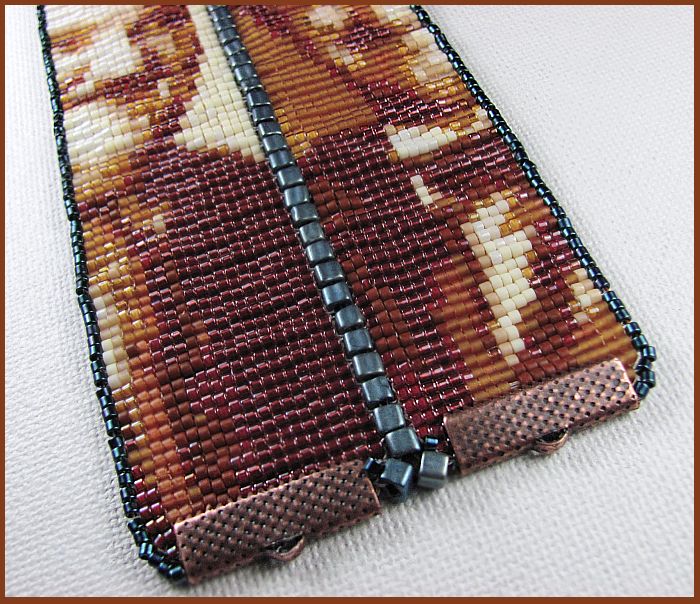
She mirrors one half and adds a bead along the join, so two warps do not sit side by side. The full method is in our guide to join bead loom panels.

Separate strips can also be part of the design. Erin wove two portrait strips on two looms and linked them with a beaded edging.

Long rows need long thread, not long needles
A wide row needs a long weft, but not a needle as long as the row. Erin puts it plainly.
Knowing Bead Tapestry Artists, who weave panels 3 feet wide, do not use a 4 foot needle!
Erin Simonetti, Waning Warps
Color and pattern in large pieces
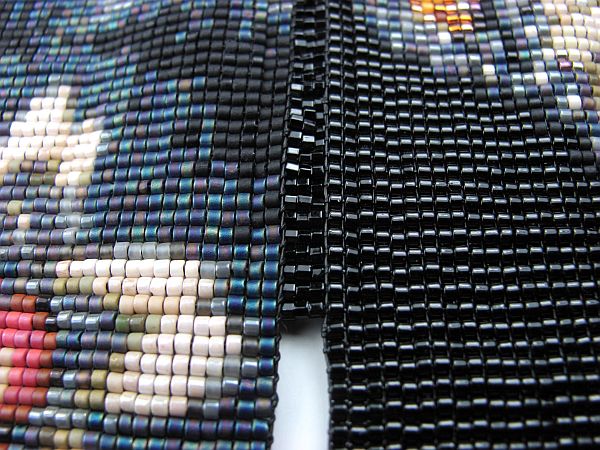
On a flat panel, the picture carries the piece. Erin explains why she chose photographs.
Since the canvas stays at a two dimensional flat surface, a pattern can make the difference.
Erin Simonetti, Pushing ‘2D Bead Loom Weaving’ into ‘3D’
It is through my desire to create photographs in beads, that I have acquired my best ‘bead color lesson’.
Erin Simonetti, Pushing ‘2D Bead Loom Weaving’ into ‘3D’
Mirrix’s free projects include bead weaving with discontinuous wefts, a technique borrowed from textile tapestry.
For most bead tapestries, though, the work is in the chart and the palette. See bead loom portrait for turning a photo into a bead picture.
Where bead looms came from
The looms used for large panels today descend from simple wooden frames. The V&A holds a late nineteenth century Apache bead loom, 23 by 38 cm, with a small beadwork sample still on it. Our history of the bead loom tells more.
Finishing a wide panel
A wide panel has many warp ends. With a shedding device, Mirrix advises sewing in the first and last rows. Fire Mountain Gems notes that a finished piece comes off the loom slightly smaller than it was on the warps, so let it rest before you tie off.
For a panel with many ends, Mirrix also sells a No Warp-Ends Kit; see types of bead looms.
Backing and display
Mirrix advises that a beaded tapestry be attached to some kind of backing.
Finish the ends before backing; see how to finish a bead loom bracelet for methods that also work on panels. For fringe, hanging and framing ideas, see bead loom wall art.
Frequently asked questions
What is a bead loom tapestry?
A large picture or design woven in beads on a loom, usually wider than jewelry and made to hang or frame.
What loom do I need for a beaded tapestry?
One with a weaving width larger than your design. Mirrix looms range from 5 to 35 inches of weaving width.
What beads are best for beaded tapestry?
Cylinder beads such as Delicas or Toho Treasures, which weave a smoother, more even surface than round seed beads.
Can I weave a tapestry wider than my loom?
Yes. Weave the design in two halves and join them, adding a bead along the join so two warps do not sit together.
See Erin’s large picture pieces in her loomed seed bead artwork, or browse more Bead Loom Guides on the blog.