How to Join Bead Loom Panels: Zipping Woven Pieces Together
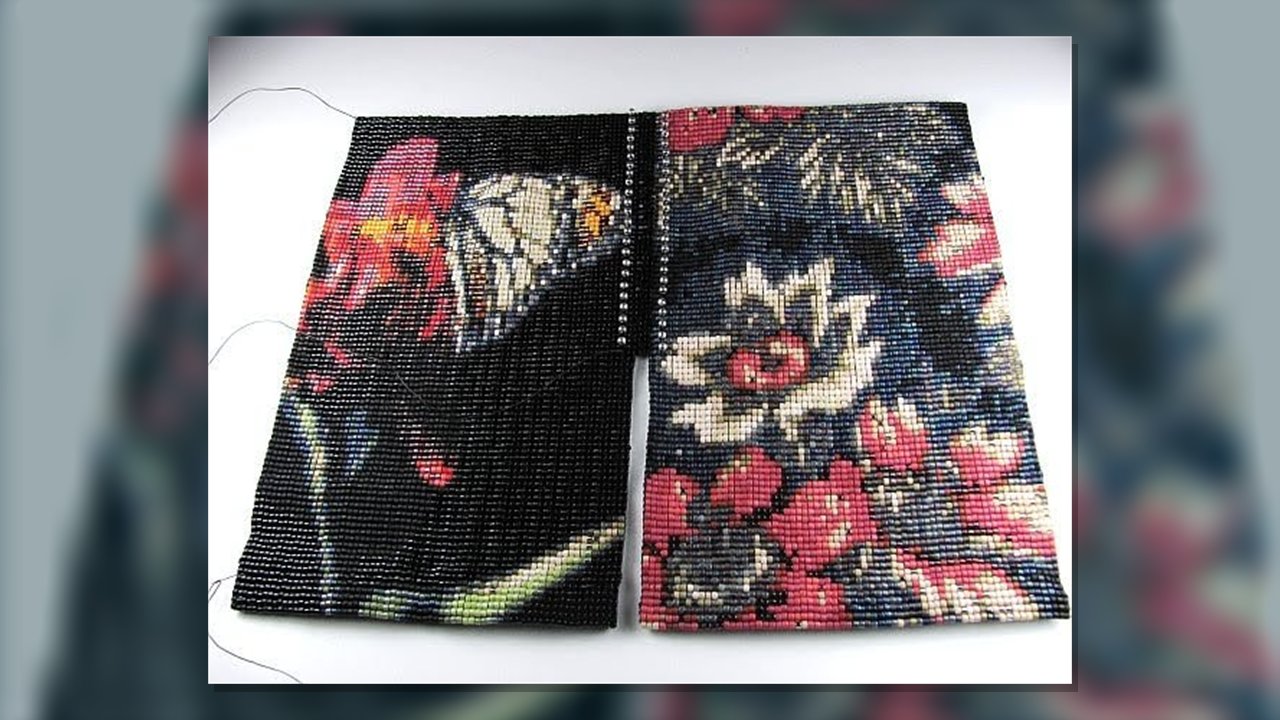
A bead loom is only so wide, and some designs are wider than any loom. Others, like bags and cases, need several flat panels that meet at a corner. For large pictures, see bead loom tapestry.
The answer to both is to weave panels separately and join them afterwards. Erin Simonetti calls it zipping.
How you zip depends on what the seam has to do. A tapestry seam should vanish. A bag seam has to bend.
Two kinds of join
| Flat, seamless join | Bending join | |
|---|---|---|
| Use | One wide tapestry or cuff from two halves | Bags, needle cases, boxes |
| Beads between panels | One bead per row, part of the design | Several beads per pass, often an accent color |
| Goal | The seam disappears | The seam lets the piece wrap and turn corners |
Know your weft before you design
A seamless join starts at the design stage. Erin’s point is that every edge of a loomed piece carries the weft differently.
Progressing row by row, the weft lays differently on each edge, of each row.
Erin Simonetti, Joining Loom Woven Panels Together, Vertically

On one edge the weft slants diagonally around the outer warp as it moves on to the next row. On the other edge it wraps around the outer warp and turns back through the same row.
Thread turns, (weft around the outer warps), are necessary to consider for a seamless vertical panel connection.
Erin Simonetti, Joining Loom Woven Panels Together, Vertically

The flat join, step by step
The method below comes from her post Joining Loom Woven Panels Together, Vertically.
- Split the design. Cut the whole picture in half, so the two halves meet along their return weft edges.
- Mirror one panel. Weave one half backwards. Once it is off the loom, flip it over and the full picture lines up.
- Leave a column for the joining bead. Design one column of beads that is not woven at all. You add it by hand as you join.
- Sew the joining bead in. Pass through each row above the end warp, add the bead, and continue into the matching row of the other panel.
- Sew again on the back. Repeat the pass below the warps on the back, so the added bead carries two wefts like every woven bead.
- Stagger the turns. Move from row to row at different points, so the thread turns do not line up.
Which panel to mirror depends on the hand you weave with.
Right hand weavers recreate the right panel "mirrored". Left hand weavers, vice-versa.
Erin Simonetti, Joining Loom Woven Panels Together, Vertically
Why add a bead?
Every woven bead sits between two warps. Butt two panels together and their outside warps sit side by side.
This ‘double warp’ line is very obvious and not consistent with the overall weave.
Erin Simonetti, Joining Loom Woven Panels Together, Vertically
The added bead fills that gap and absorbs the return weft on both edges. Because it is part of the pattern, the join reads as one weave.

Hide the thread turns
Each time the sewing thread moves to a new row, it makes a small turn. Lined up, those turns show as a stripe.

Erin’s two fixes are to stagger the turns between rows, and to turn in beads that match the thread. With white thread, turn in white beads; with a darker thread, turn in darker beads.
The bending join: bags and cases
A bag needs the opposite of a flat seam. Her first loomed cell phone bag showed why.
Her panels were woven left to right, so the beads lay awkwardly where the bag had to wrap. Weaving them top to bottom would have meant rows 81 beads wide.
My answer to this was to zip up the sides using (3) extra beads.
Erin Simonetti, Zipping Up Loom Woven Panels!
She joined the panels in groups of three 11/0 cut beads, adding one metallic accent bead with each pass. The extra beads let the seam curve, and the accent bead takes the pull when the sides are stressed.

On the inside of the seam she leaves out the accent bead. She keeps her needle in the outer edge of each bead, not below the looming threads, so only the bead edges show on top.
Stop beads and matching bead sizes
Her loomed needle case added two more lessons. The first is to use stop beads.
I like to use a stop bead because I think it gives the thread a more secure way of holding the sides together. It also hides the turned thread, between the loomed rows.
Erin Simonetti, Zipping Up the Needle Case
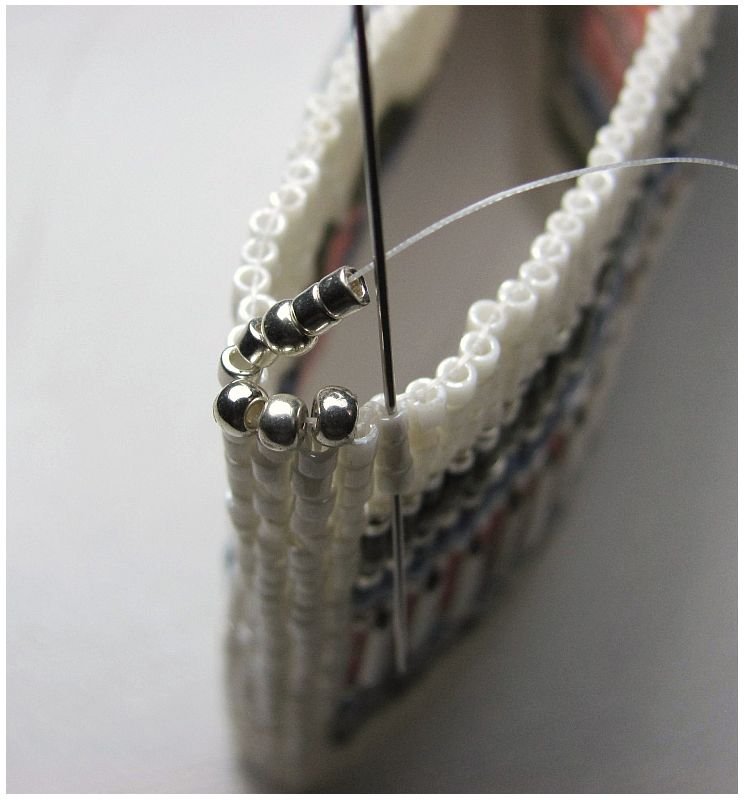
The second is to match bead types. She edged the case base with 11/0 Toho rounds, but zipped the sides with Delicas, the same beads the case was woven with. Rounds next to Delicas would have made the seam buckle.
For wider side panels on a later bag, she wove lines of nine Delicas with a double thread and two needles. She then ran a separate thread across groups of four beads to straighten them.
Tips for a clean join
- Finish the warps first. Erin manages her warps before joining, so no warp threads need weaving back in.
- Choose the join color early. An accent bead in the seam can pick up a color from the design.
- Never use warps for fringe. She notes they stretch and move with wear.
- Keep tension even. Panels that match in tension match in length. See bead loom warp tension.
- Mind the edges. Hidden knots at the edges keep the join smooth. See how to add new thread on a bead loom.
Frequently asked questions
How do you join two bead loom panels without a visible seam?
Mirror one panel, line up the return weft edges and add one bead between them on every row, sewing above the warps on the front and below them on the back.
Why does a line show where two loomed panels meet?
Each panel has an outside warp, so two warps end up side by side. Adding a joining bead between them removes the double warp line.
How do you join loomed panels for a bag?
Zip the sides with a few beads per pass so the seam can bend, using the same type of bead as the panels so the seam lies flat.
Does left or right handed weaving matter for joining panels?
Yes. Right handed weavers mirror the right panel, and left handed weavers mirror the left.
See Erin’s loomed bags and other finished pieces in Beaded Jewelry Gallery 1, or browse more Bead Loom Guides on the blog.