Loomed Bead Portraits: Turning a Photograph into Bead Painting
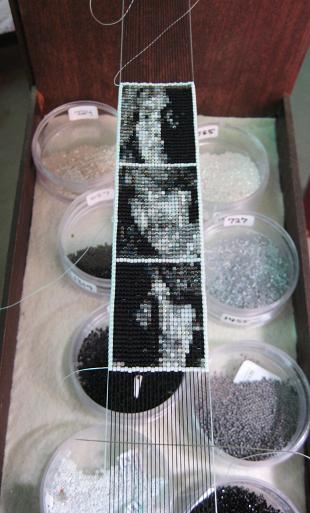
Bead loom weaving builds a picture out of a grid of small, even beads. That makes it well suited to portraits, as long as the pattern and the colors are right.
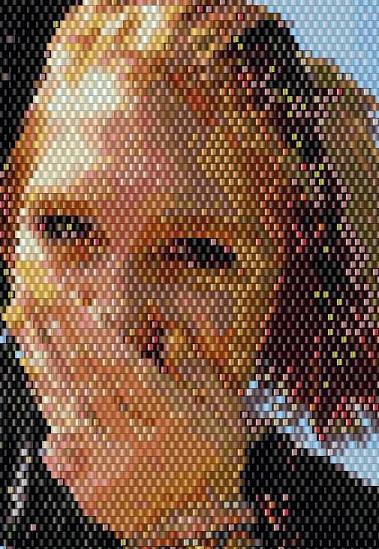
Erin Simonetti calls her detailed loomed work bead painting. Her detailed patterns, linked from the custom bead loom patterns section of the home page, look like bead painting.
Step 1: Choose the photograph
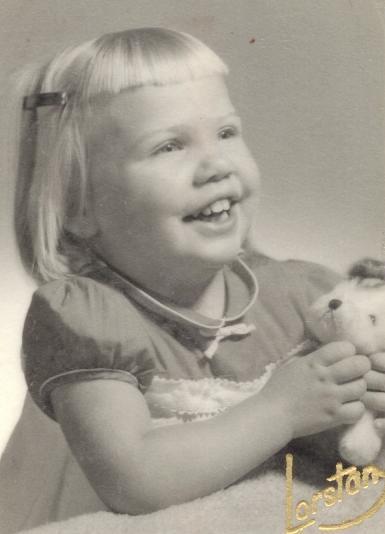
Not every photo makes a good bead portrait. A bead grid is coarse compared with a photo, so fine detail disappears.
A few general guidelines help:
- A clear subject. One face, filling most of the frame.
- Good contrast. Light and shadow help the features read at a distance.
- A calm background. Busy backgrounds turn into noise in beads.
- The right size. The more beads across, the more detail you keep.
Erin’s portraits made from photographs are shown in her loomed wearable art collection.
Step 2: Make the graph
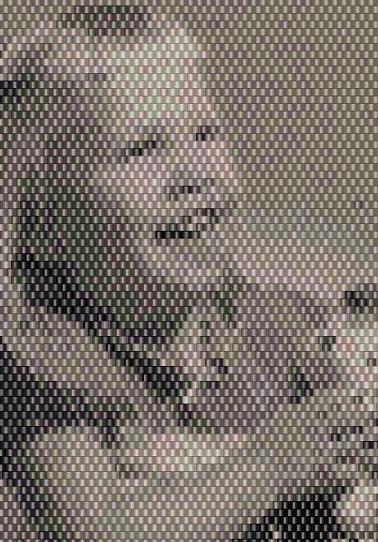
There are two ways to turn a photo into a bead graph. Erin has used both.
It was more difficult to create realist patterns, or copy photogrpahs, on a piece of graph paper.
Erin Simonetti, Wearable Art
| Graph paper by hand | Bead pattern program | |
|---|---|---|
| Speed | Slow | Fast first draft |
| Control | Total; every bead is a choice | Needs editing afterward |
| Color matching | You pick from real beads | The program’s palette needs correcting |
| Best for | Flowers, motifs, free-hand designs | Photographs and realistic shading |
Programs make realistic graphs practical. But Erin is clear about their limits.
There isn’t a program available that offers a ‘click, perfect pattern’ option!
Erin Simonetti, Create a Bead Program Color-Journal!
On her blog she names BeadTool as the program most bead artists own, and Bead Creator Pro as a pricier option with more control.
Step 3: Correct the program’s colors
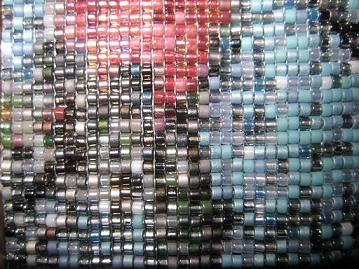
This is the step most beginners skip. A pattern program picks bead colors from its built-in palette, and those on-screen colors do not always match the real beads.
In one pattern, Erin found the program had chosen a Delica color, DB170, for a dark maroon area. The real bead looked very different. It is a transparent bead with an AB finish, and the colors it shows change with the light.
you must learn how to ‘edit each bead color’ offered in the pallet created by the Programmer!
Erin Simonetti, Create a Bead Program Color-Journal!
Her approach turns the program into a personal color journal:
- Generate the draft pattern.
- Pull the requested colors from your bead stash and compare them with the screen.
- Edit any color that does not match, in the program’s palette.
- Mark each corrected color, for example by changing its number or name.
- Reuse the corrected palette for every future pattern.
She does the same when designing from a rough draft. In a later post she describes pulling real beads to match the draft, then going back to the program to change the color numbers so the pattern is correct next time.
Step 4: Choose finishes, not just colors
In bead painting, finish changes color. A matte, an opaque and a transparent bead of the same hue look different side by side.
They actally create a completely different color, when placed next to another, of a different finish.
Erin Simonetti, Wearable Art
| Finish | Role in a portrait | Watch out for |
|---|---|---|
| Matte | Soft skin tones and backgrounds | Lighter, thinner beads; cull for size |
| Opaque | Solid areas and strong shapes | Can look flat if overused |
| Transparent AB | Sparkle and highlights | Shifts with light and weft color |
| Metallic | A glint of light or an accent | Use sparingly |
Her Coffee Shop journal describes planning one cuff around its finishes.
Believe it or not, it isn’t in the ‘selected colors’, but in the ‘selected finishes’.
Erin Simonetti, Coffee Shop Blog
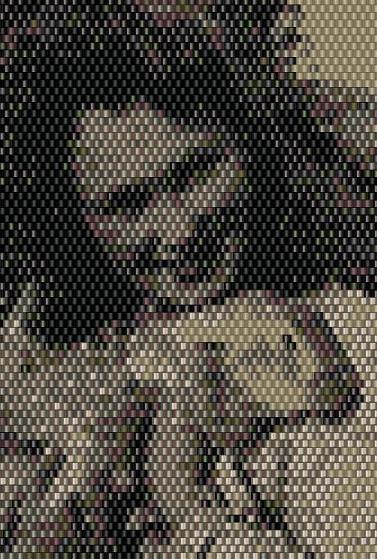
For that cuff she chose mostly mattes and opaques, with a sprinkle of metallic and AB. Weft color matters here too; see our guide to bead loom thread color.
How many colors does a bead loom portrait need?
There is no fixed number. Erin’s journal gives two real examples:
| Piece | Width | Colors |
|---|---|---|
| Black and white film strip cuff | 26 beads wide | 35 Delica colors |
| Breast Cancer Awareness cuff | Not stated | 69 Delica colors |
Even a black and white design used dozens of colors. A large palette is easier with Delicas; our guide to Delica beads for loom weaving covers the color range and how to estimate quantities.
These selections give me the wide array, for good depth and dimension, in my bead paintings.
Erin Simonetti, Techniques
Step 5: Weave and judge from a distance
Weave the graph row by row, keeping the colors laid out in order of use. Step back often. Bead portraits read best at arm’s length, where the eye blends neighboring colors.
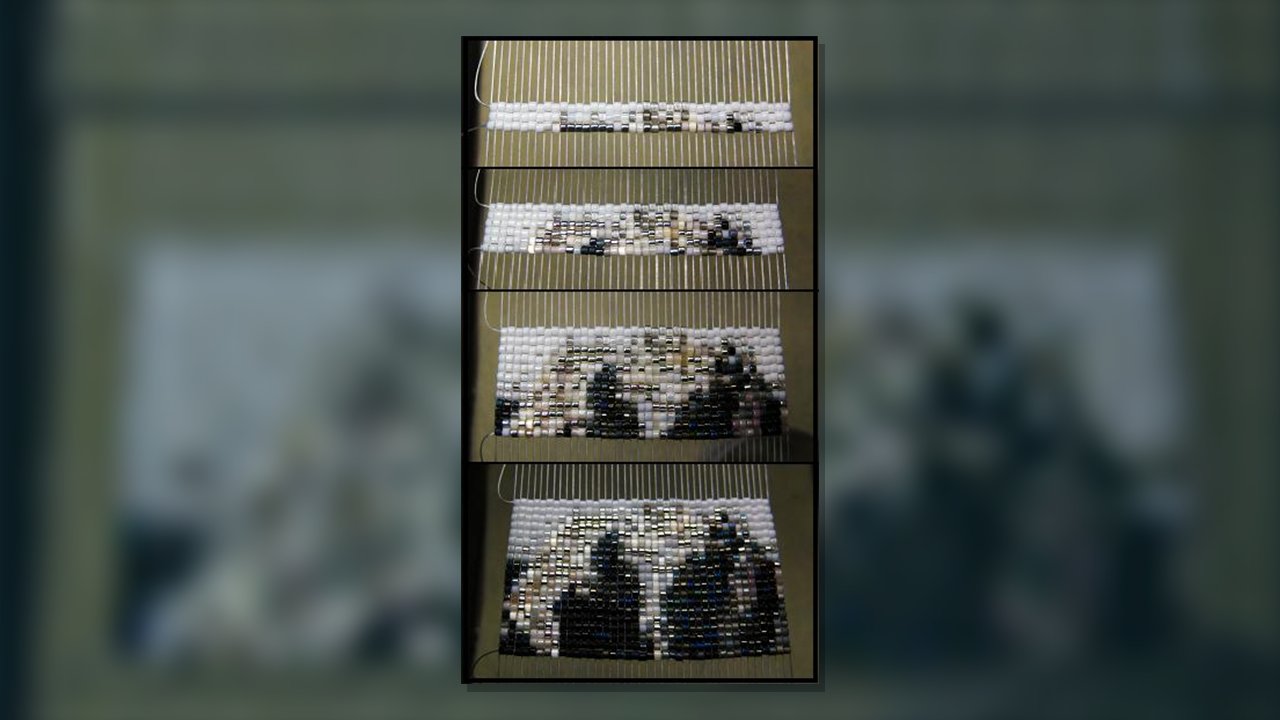
Erin’s journal shows a cuff design taking shape over its first rows, with the subject kept secret until it emerged.
These stages may give an idea as to how I use my ‘palette’ of bead colors to ‘paint’ the design on a cuff.
Erin Simonetti, Coffee Shop Blog
You can follow more of her pieces from start to finish in the Coffee Shop journal.
Graphed by hand still matters
Programs are useful, but Erin’s own view favors the hand-graphed work.
My most revered pieces are those not patterned from a program, but those I have graphed or loomed free hand.
Erin Simonetti, Sesen
Even when a program makes the first draft, the finished portrait depends on the choices you make afterward.
Frequently asked questions
Can you make a bead loom pattern from a photo?
Yes. Graph it by hand or use a bead pattern program, then check every color against your real beads and correct the program’s palette before weaving.
What is the best bead for a loomed portrait?
11/0 cylinder beads such as Delicas are a common choice, because they are even and come in a very large range of colors and finishes.
How many colors do I need for a bead portrait?
It varies. One of Erin’s black and white cuffs used 35 colors on a 26-bead width, while another cuff used 69.
Why does my finished bead portrait not match the pattern?
Pattern programs often pick bead colors that look different in real life, especially transparent and AB finishes. Correct the palette against real beads first.
For dimensional work beyond flat portraits, see our bead tole guide, or browse more Bead Loom Guides on the blog.